Categories
New Blog
The Evolution of Hot Melt Technology: Why 20 Years of R&D Matters for Your Factory
May 27 , 2026In the fast-paced world of modern manufacturing, efficiency, precision, and reliability are the cornerstones of profitability. Whether you are running a high-speed packaging line, producing automotive interiors, or manufacturing premium mattresses, the equipment you choose directly dictates your bottom line. Among the critical technologies driving these industries, hot melt adhesive systems have undergone a massive transformation.
Gone are the days when hot melt machines were merely "heated pots that melt glue." Today, they are highly sophisticated, IoT-ready, precision-engineered systems.
But why should a factory owner or production manager care about the history of this technology? The answer is simple: Research and Development (Rediscovery & Development). Equipment that integrates 20 years of continuous R&D doesn't just run better; it fundamentally changes the economics of your production floor.
At YONGTAI MACHINE, we have spent over two decades at the forefront of this technological revolution. In this comprehensive guide, we will explore how hot melt technology has evolved, why 20 years of R&D is the ultimate risk-mitigation strategy for your factory, and how our specialized machinery can skyrocket your OEE (Overall Equipment Effectiveness).
1. The Historical Paradigm Shift: From "Heated Pots" to Smart Systems
To appreciate where hot melt technology is today, we must look at where it started. Twenty years ago, industrial glue applicators were rudimentary. They suffered from frequent downtime, inconsistent heating, severe adhesive degradation (charring), and high energy consumption.
The Old Way (Early 2000s)
*Manual Pressure Controls: Operators had to manually adjust pneumatic valves, leading to inconsistent glue weights.
*Poor Thermal Zoning: Temperature fluctuations within the tank caused the adhesive to overheat near the elements, creating "char" that clogged nozzles.
*High Waste: Massive glue tailing and stringing meant factories wasted tons of adhesive annually.
The Modern R&D-Driven Way
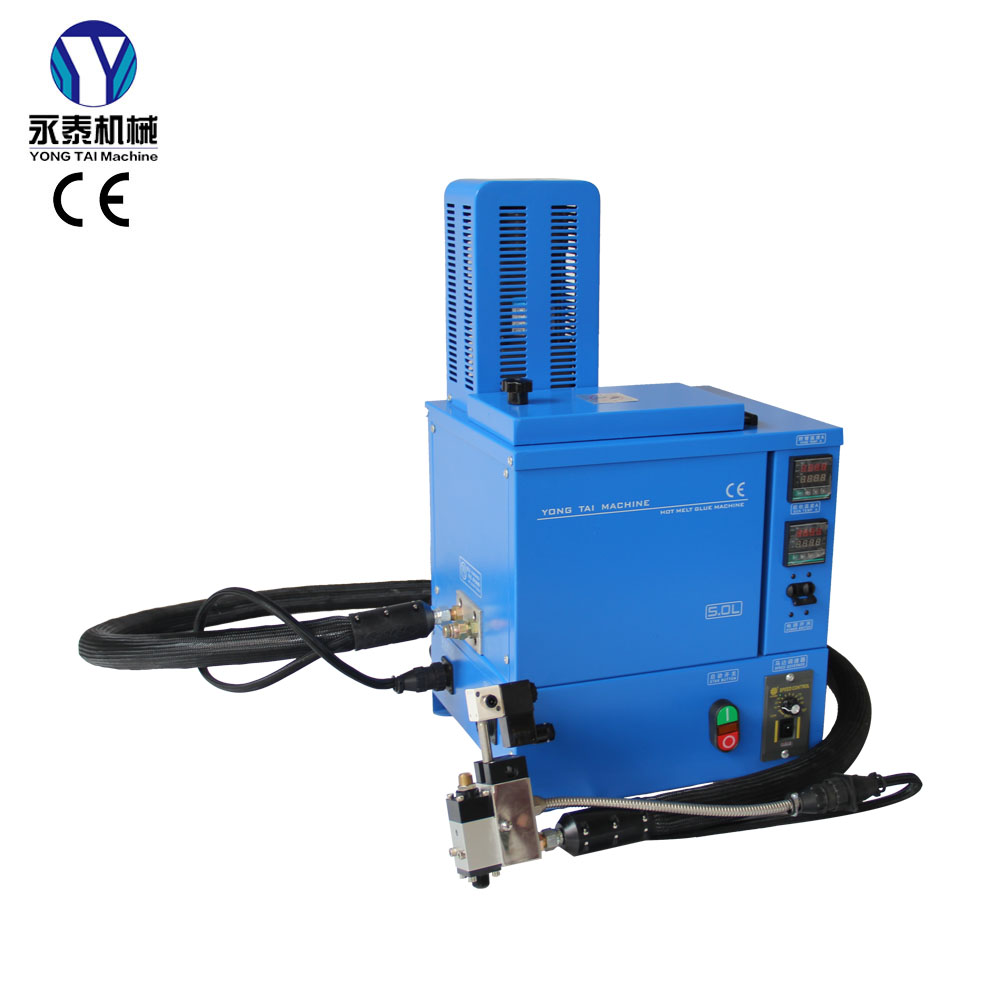
Today, through two decades of iterative engineering, the modern hot melt adhesive machine has evolved into a digital, highly responsive piece of smart manufacturing hardware.
Modern systems utilize multi-zone PID temperature controllers, precision gear pumps, and anti-drool nozzle designs. This evolution ensures that the adhesive is treated as a sensitive chemical compound, preserving its bonding integrity from the tank to the substrate.
2. Why 20 Years of R&D Matters for Your Factory Floor
When investing in new factory machinery, it is tempting to look strictly at the upfront capital expenditure (CAPEX). However, cheap, non-R&D-backed machinery invariably leads to catastrophic operational expenditure (OPEX) later on.
Here is exactly what 20 years of dedicated R&D brings to your production facility:
A. Eradication of "Char" and Nozzle Clogging
Adhesive charring occurs when hot melt glue is exposed to excessive heat and oxygen over time. It turns into hard carbon crusts that ruin pumps and clog nozzles. 20 years of R&D has taught engineers how to design progressive melting systems and airtight tanks. By melting only what you need, when you need it, the glue retains its pristine chemical properties.
B. Micro-Precision Coating and Weight Control
In industries like labeling, non-woven textiles, and automotive assembly, applying too much glue ruins the product, while applying too little causes structural failure. Decades of engineering have perfected the synchronization between the machine’s PLC and the production line's line-speed tracking, ensuring a uniform coat down to the micron.
C. Energy Efficiency in an Eco-Conscious Market
Energy costs are rising globally. Older hot melt units are notorious energy hogs because they lack proper thermal insulation. Modern R&D focuses heavily on sustainability. Advanced eco-mode settings automatically lower tank temperatures during production pauses, and high-density insulation keeps heat trapped inside the tank where it belongs, reducing your factory’s carbon footprint and electricity bills.
3. Deep Dive into Specialty Technologies: PUR and Automation
As industries evolved, standard EVA and metallocene hot melts were no longer sufficient for heavy-duty or high-moisture environments. This gave rise to Polyurethane Reactive (PUR) adhesives. However, handling PUR requires an entirely different level of mechanical engineering due to its moisture-curing nature.
The PUR Revolution
PUR forms a covalent chemical bond with substrates, offering unmatched resistance to heat, moisture, and solvents. But if PUR comes into contact with even a trace of ambient humidity inside the machine, it cures permanently inside the tank, ruining the equipment.
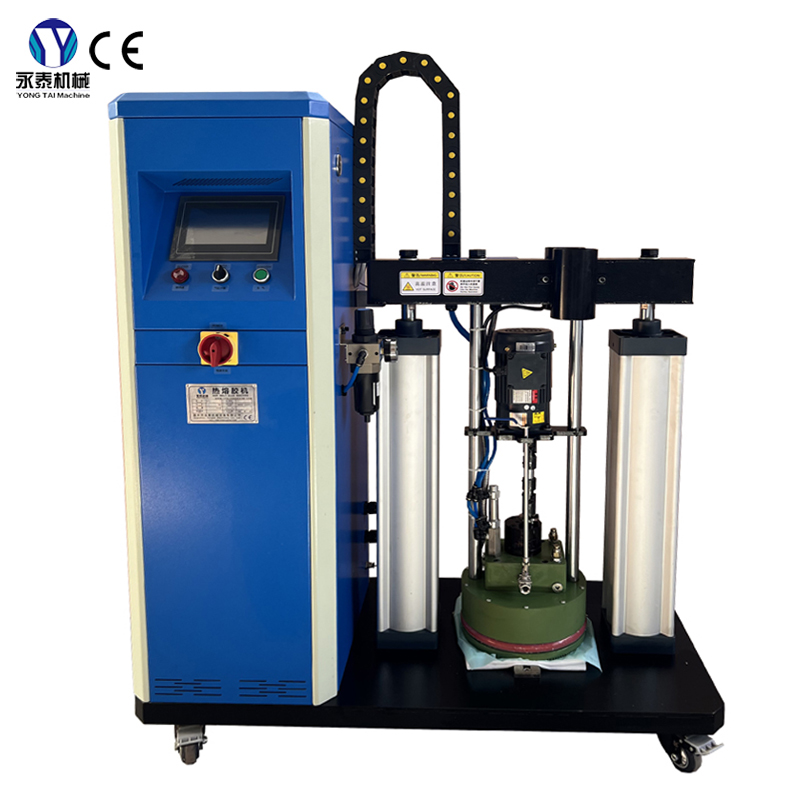
Through 20 years of rigorous testing, YONGTAI MACHINE developed specialized, hermetically sealed PUR laminating machine systems. These units utilize dry nitrogen blankets or specialized non-reactive melting plates to isolate the adhesive from moisture, allowing factories to leverage the incredible bonding power of PUR without the risk of equipment damage.
4. How YONGTAI MACHINE Translates 20 Years of Expertise into Your Success
At YONGTAI MACHINE, we don't just assemble parts; we engineer custom adhesive delivery solutions. Over the past two decades, we have listened to the complaints, frustrations, and goals of thousands of factory managers worldwide. We took that data and poured it back into our engineering labs.
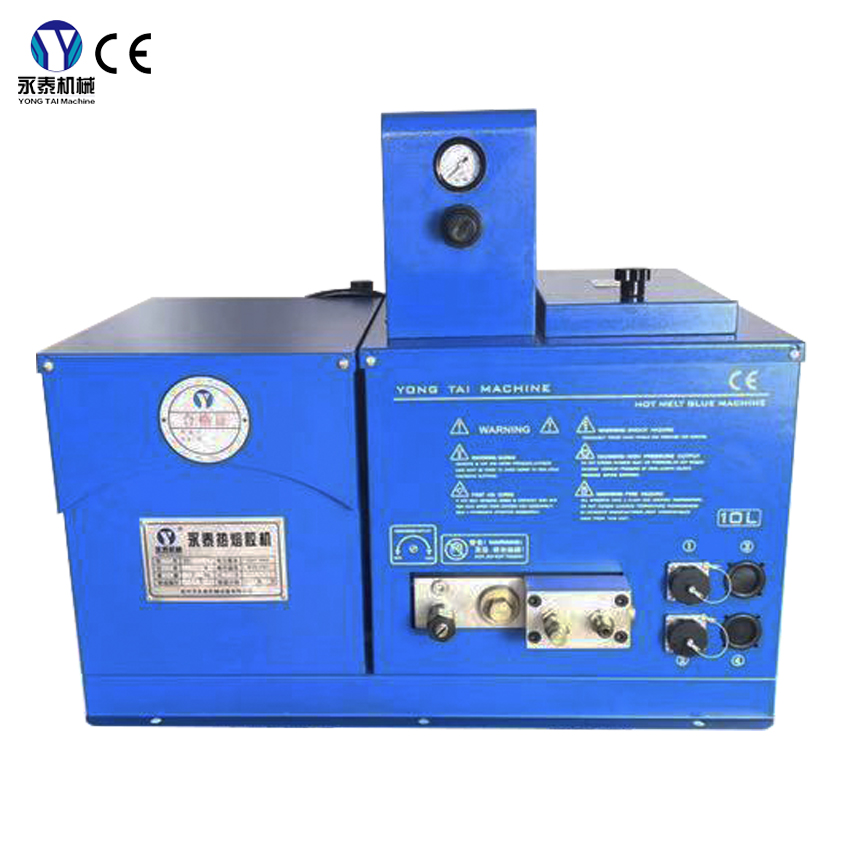
Our comprehensive product line reflects this evolutionary journey. From standalone melting units to fully automated, multi-axis automatic glue dispenser setups, every machine we build is a testament to durability and forward-thinking design.
What Sets YONGTAI Apart?
1.Customization Capability: We understand that no two production lines are identical. We customize hose lengths, nozzle configurations, tank capacities, and software interfaces to seamlessly plug into your existing ecosystem.
2.Global Component Standard: We utilize world-class electronic and pneumatic components (such as Omron, Schneider, and SMC) to ensure that replacement parts are easily accessible wherever your factory is located.
3.Uncompromising Material Selection: Our tanks feature specialized Teflon coatings to minimize adhesive friction and simplify cleaning, while our applicator heads are machined from high-grade, heat-treated alloys to resist thermal distortion.
5.Frequently Asked Questions (FAQ)
Q1: Why is temperature control so critical in hot melt adhesive machines?
Answer: Hot melt adhesives rely on precise thermal windows to achieve their optimal viscosity and bonding strength. If the temperature is too low, the glue will not wet out properly, leading to weak bonds. If the temperature is too high, the adhesive undergoes thermal degradation, turning into carbon char that clogs nozzles, damages pumps, and ruins the machinery. R&D-optimized systems from YONGTAI MACHINE use advanced PID multi-zone heating to keep temperatures stable within ±0.5℃.
Q2: What is the main difference between standard EVA hot melt and PUR hot melt systems?
Answer: EVA hot melts are thermoplastic materials that melt when heated and solidify when cooled; this process can be repeated. PUR (Polyurethane Reactive) hot melts melt like standard glue but then undergo a chemical cross-linking reaction with the moisture in the air, creating a permanent, non-reversible bond that withstands extreme heat and moisture. Because PUR reacts with moisture, it requires specialized, airtight melting systems like YONGTAI's PUR laminating machines to prevent the glue from curing inside the machine.
Q3: How does an automatic glue dispenser improve factory safety?
Answer: Manual glue application exposes operators to high temperatures (often exceeding 180℃), toxic fumes, and repetitive strain injuries. Transitioning to an automatic glue dispenser removes the human element from the immediate hazard zone. Furthermore, automated systems feature built-in safety interlocks, over-temperature protection, and pressure-relief valves that safeguard both your workforce and your factory infrastructure.
Q4: How often should a hot melt machine filter be changed?
Answer: Filter replacement intervals depend entirely on the quality of your adhesive and your production volume. However, thanks to modern engineering designs that reduce charring, YONGTAI machines require significantly fewer filter changes than older models. Generally, we recommend inspecting the main tank filter every 500 to 1,000 hours of operation, or during scheduled plant maintenance cycles, to ensure optimal hydraulic flow.
Q5: Can YONGTAI MACHINE systems be integrated into existing European or American production lines?
Answer: Absolutely. 20 years of international R&D has taught us the importance of cross-compatibility. Our machines feature universal I/O signals, standardized communication protocols (such as Modbus or Profibus), and adjustable mechanical mounting frames. This ensures that a YONGTAI system can be retrofitted into any existing global production line seamlessly.
 contact us
Tel : +86-13599291170
Mobile : +86-13599291170


IPv6 network supported